Showing posts with label CSR Projects bangalore. Show all posts

Tuesday, 31 December 2024

School Health Interventions

The alignment of CSR initiatives with the SDGs in India is a powerful concept. It offers a strategic approach to ensure that corporate contributions to society are consistent with global development priorities.

Against such a backdrop, the intervention in the form of the School Health Program by Trinity Care Foundation (TCF) attains significance. 


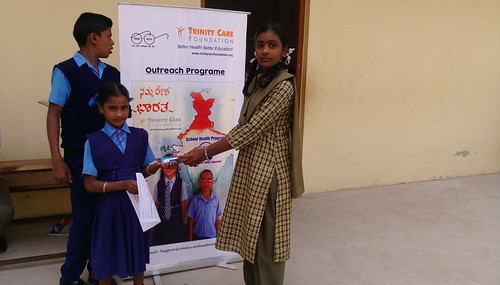
Since 2012, TCF’s initiative has reached more than 1000 primary, secondary and high schools in various districts of Karnataka, including Ramanagara, Bangalore Urban, Kolar and Bangalore Rural.


👉 Recent Corporate Social Responsibility Projects implemented by Trinity Care Foundation in Ramanagara District, Karnataka state can be viewed in the links below ;

  1. Community Health Programs : https://www.linkedin.com/pulse/outreach-health-programs-trinitycarefoundation/
  2. Cardio-vascular Project : https://www.linkedin.com/pulse/ncds-program-supported-dotdash-meredith-india-trinitycarefoundation/ 
  3. Oral Health Program : https://www.linkedin.com/pulse/oral-health-centre-ushering-change-transforming-xwnfc/
  4. Solar enabled Public Schools : https://www.linkedin.com/pulse/csr-project-aligned-uns-sdg7-trinitycarefoundation/
  5. Community RO Plants https://www.linkedin.com/pulse/safe-drinking-water-project-trinitycarefoundation/
  6. Safe Drinking Water Project in Public Schools : https://www.linkedin.com/pulse/wash-schools-trinitycarefoundation/
  7. Comprehensive School Health Program for Public Schools https://www.linkedin.com/pulse/school-health-dr-tony-thomas/
  8. Assistive Aids for Disabled School Students and Hearing Aids for Students in Public Schools https://www.linkedin.com/pulse/importance-integrating-ear-hearing-care-dr-tony-thomas/
  9. School Oral Health Program : https://www.linkedin.com/pulse/impact-oral-health-overall-well-being-trinitycarefoundation/
  10. Covid19 initiatives 2020-2022 : https://www.trinitycarefoundation.com/covid-19-vaccination-drive-in-karnataka/ | https://www.trinitycarefoundation.com/covid19/

Wednesday, 24 May 2023

World No Tobacco Day 2023: We need food, not tobacco.

 World No Tobacco Day is observed every year on May 31st to raise awareness about the harmful effects of tobacco on health and encourage people to quit smoking. The theme for World No Tobacco Day 2023 is “We need food, not tobacco.” This theme emphasizes the importance of healthy food choices and the need to prioritize food over tobacco.

Tobacco use is a leading cause of preventable death worldwide. According to the World Health Organization (WHO), tobacco use kills more than 8 million people every year. Smoking is associated with several health problems, including lung cancer, heart disease, stroke, and respiratory illnesses. Smoking also harms the environment and contributes to climate change.

On the other hand, food is essential for our health and wellbeing. A healthy diet can reduce the risk of chronic diseases, such as obesity, diabetes, and heart disease. It can also boost our immune system and improve our mental health. A balanced diet includes a variety of fruits, vegetables, whole grains, lean protein, and healthy fats.

Unfortunately, tobacco use can interfere with healthy eating habits. Smokers often experience a reduced sense of taste and smell, which can affect their enjoyment of food. Smoking can also suppress appetite and increase the risk of nutrient deficiencies. Furthermore, smoking can damage the digestive system and increase the risk of digestive disorders. 


Therefore, it is crucial to prioritize food over tobacco. By quitting smoking, individuals can improve their sense of taste and smell, increase their appetite, and reduce their risk of nutrient deficiencies and digestive disorders. Moreover, quitting smoking can free up financial resources that can be used to purchase healthy foods and support a healthy lifestyle.

In conclusion, the theme for World No Tobacco Day 2023, “We need food, not tobacco,” highlights the importance of prioritizing healthy food choices over tobacco use. By quitting smoking and adopting a healthy lifestyle, individuals can improve their health and wellbeing and contribute to a healthier and more sustainable future for all.

Source : World No Tobacco Day 2023

Saturday, 24 April 2021

School Health Program | January to March 2021

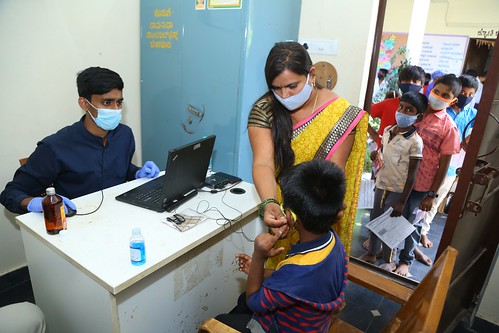
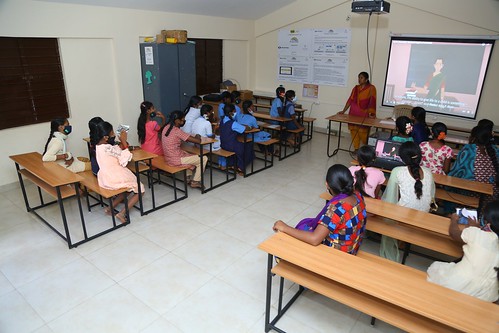
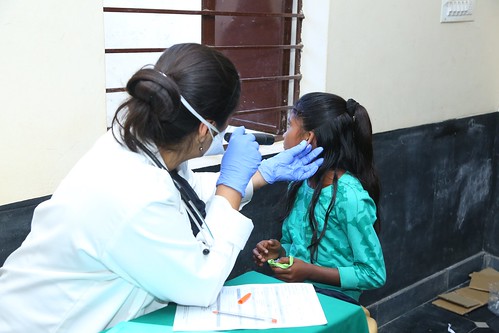
As part of Public Healthcare project in low-income schools, Trinity Care Foundation conducted Health Screening, Health Education, Covid19 awareness programs and health kits to 5,700 plus underprivileged government students in Anekal, Kanakapura and Ramanagara Taluks, Karnataka, India during the Pandemic. 


School Students Eye Check-up 

Write to us to connect [ support@trinitycarefoundation.org ] for CSR implementation, Employee Engagement & Employee Volunteer Opportunities in Karnataka state, India. 

Speech & Hearing Testing


Adolescent Health Education 


School Students Health Check-up 

Trinity Care Foundation is a Public Health Organization, has the Trust registration, PAN, TAN, 12A, 80G, Professional tax and FCRA. It is registered with NITI Aayog, Government of India. It is National Health Mission Partner in Karnataka, India.

Email: support@trinitycarefoundation.org | tel: +91 988039 6666 | +91 988035 8888 |

  1. Website : www.trinitycarefoundation.com
  2. Instagram : www.instagram.com/trinitycarefoundation
  3. Flickr Impact : www.flickr.com/photos/trinitycarefoundation/albums
  4. Twitter : https://twitter.com/tcfindia 
                                                  *******************

Monday, 31 December 2018

School Oral Health Program | Karnataka

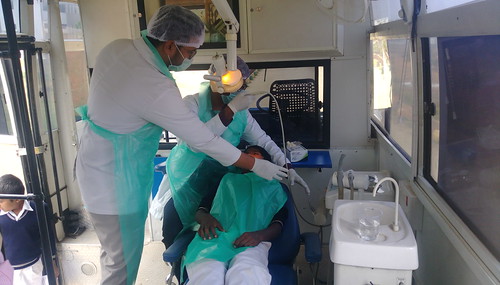
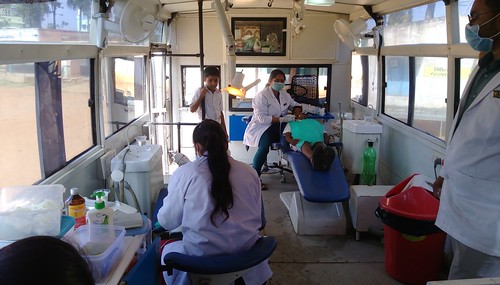
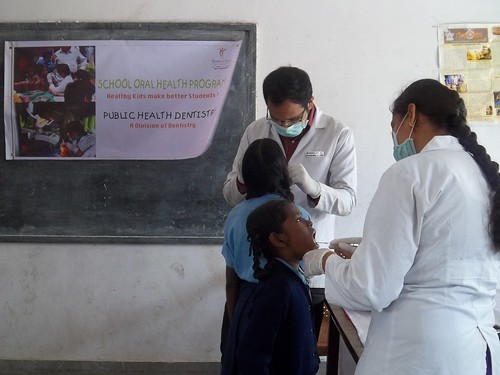
As part of Healthcare project in low-income schools, Trinity Care Foundation provided oral health education, Dental check-ups, Dental treatments, referral services and oral health kits to 2,700 plus underprivileged government students in Anekal and Devanahalli Taluk, Karnataka, India in November 2018 free of cost.


If you love to partner, volunteer or support this public health dentistry project,  Write to us with your resume [ support@trinitycarefoundation.org ] View the public health dentistry project photographs on Trinity Care Foundation Flickr Profile !


School Health initiative dental treatments


School Health initiative - Oral Health Kits


School Dental Program Karnataka


The details of the school oral health program can be reviewed in the links below;
  1. Health Program in Kittur Rani Chennamma School, Anekal ~ https://flic.kr/s/aHsmwF7Ux4
  2. Health Program in Anekal Town Government School, Anekal ~ https://flic.kr/s/aHsmnHhPXC
  3. Health Program in GMPS [ Government School ] Anekal ~ https://flic.kr/s/aHsmrHJNiy
  4. Health Program in Kittur Rani Chennamma School, Devanahalli  ~ https://flic.kr/s/aHsmwFhLq2
  5. Health Program in Marsur Government Schools, Anekal  ~ https://flic.kr/s/aHsmupBdxK
  6. Health Program in Morarji Desai School ~ Anekal ~ https://flic.kr/s/aHsmrHY4NL
  7. Health Program in Kittur Rani Chennamma School, Anekal ~ https://flic.kr/s/aHsmwF7Ux4
  8. Health Program in Morarji Desai School ~ Devanahalli ~ https://flic.kr/s/aHskN6nvUw 

Trinity Care Foundation is a Public Health Organization, has the Trust registration, PAN, TAN, 12A, 80G, Professional tax and FCRA. It is registered with NITI Ayog, Government of India. It is National Health Mission Partner in Karnataka, India.

Email: support@trinitycarefoundation.org | tel: +91 988039 6666 | +91 988035 8888 ~ www.facebook.com/trinitycarefoundation

Website : www.trinitycarefoundation.com
Instagram : www.instagram.com/trinitycarefoundation
Impact : www.flickr.com/photos/trinitycarefoundation/albums
Twitter : https://twitter.com/tcfindia

Sunday, 5 March 2017

Why the need for oral health awareness campaigns

Need for oral health awareness campaigns : 

  • Oral diseases affect 3.9 billion people worldwide, with untreated tooth decay (dental caries) impacting almost half of the world’s population (44%), making it the most prevalent NCD.
  • Globally, between 60–90% of schoolchildren and nearly 100% adults have tooth decay, often leading to pain and discomfort.

  • Severe periodontal (gum) disease, which may result in tooth loss, is found in 15–20% of middle-aged (35–44 years) adults. 
  • Severe periodontitis and untreated tooth decay in the primary teeth (milk teeth or baby teeth) are among the top 10 most prevalent of all conditions. Combined, these conditions affect 20% of the global population
School Oral Health Project

  • Globally, about 30% of people aged 65–74 years have no natural teeth, a burden expected to increase in the light of ageing populations
  • Oral disease is associated with significant pain and anxiety, as well as disfigurement, acute and chronic infections, eating and sleep disruption, and can result in an impaired quality of life. In developing countries, this is exacerbated due to the lack of pain control and treatment not being readily available
  • Oral conditions are the fourth most expensive to treat. In the United States alone, US$110 billion are spent yearly on oral healthcare. In the European Union, annual spending on oral healthcare was estimated at €79 billion in the years 2008-2012, which is more than the money invested in the care of cancer or respiratory diseases
  • Oral health is essential to maintaining general health and well-being 
About Trinity Care Foundation;

Trinity Care Foundation is a charitable Trust with track record of 9+ years in priority areas of health. Registered with the Income Tax Department, Government of India under Section 12A and 80G of the Income Tax Act, 1961. Registered with the Ministry of Home Affairs, Government of India under Section 11 (1) of the Foreign Contributions (Regulation) Act (FCRA), 2010. It is also registered with the National Health Mission and NITI Aayog [ The National Institution for Transforming India, is the premier policy 'Think Tank' of the Government of India.]


email: support@trinitycarefoundation.org | tel: +91 9880396666 | +91 9880358888

Monday, 6 February 2017

Priority eye diseases : Refractive errors and low vision

Refractive errors and low vision


Definition
Refractive errors include myopia (short-sightedness), and hyperopia (long-sightedness) with or without astigmatism (when the eye can sharply image a straight line lying only in one meridian).

For low vision, the following two definitions are in use:
• (WHO) Low vision is visual acuity less than 6/18 and equal to or better than 3/60 in the better eye with best correction.
• (Low Vision Services or Care) a person with low vision is one who has impairment of visual functioning even after treatment and/or standard refractive correction, and has a visual acuity of less than 6/18 to light perception, or a visual field less than 10 degrees from the point of fixation, but who uses, or is potentially able to use, vision for the planning and/or execution of a task for which vision is essential.


Magnitude
Recent studies have confirmed the existence of a large burden of uncorrected refractive errors, although the interventions required are significantly cost effective, and have an important impact on economic development and quality of life. Severe refractive errors have been estimated to account for about 5 million blind people. According to the most recent data available to WHO, there are an estimated 124 million people in the world with low vision. About a fourth of these would benefit from low vision services.

Prevention and treatment
Refractive errors can be rectified with appropriate optical correction while people with low vision may be helped with low vision devices

Source : World Health Organization, South-East Asia Regional Office

About Trinity Care Foundation;

Trinity Care Foundation is a charitable/not-for-profit Trust with track record of 9+ years in priority areas of health. Registered with the Income Tax Department, Government of India under Section 12A and 80G of the Income Tax Act, 1961. Registered with the Ministry of Home Affairs, Government of India under Section 11 (1) of the Foreign Contributions (Regulation) Act (FCRA), 2010. It is also registered with the National Health Mission and NITI Aayog [ The National Institution for Transforming India, is the premier policy 'Think Tank' of the Government of India.]

Join with us : https://www.facebook.com/trinitycarefoundation ; https://www.instagram.com/trinitycarefoundation

Contact us for implementing CSR healthcare initiatives. Impact : https://www.flickr.com/photos/trinitycarefoundation/albums

email: support@trinitycarefoundation.org | tel: +91 9880396666

web: http://www.trinitycarefoundation.com : http://trinitycarefoundation.org

Sunday, 11 December 2016

School Health | Nov. 2016 Update

We had initiated the School Health Program for underprivileged students studying in Government schools in Karnataka State from 09.November.2016 onward.


We have covered 9 Government Schools in the November month 2016, Kindly visit https://www.flickr.com/photos/trinitycarefoundation/albums


The team has been covering government schools and undertaking the following activities in the month of November 2016:
  1. Health screening of students for height, weight, skin, eye, dental, speech and hearing, cardiac, oral lesions, facial deformities, and others., 
  2. Facilitating medical intervention for those shortlisted through the pre-screening
  3. Imparting awareness on health issues,adolescent health, hand-washing, ill effects of tobacco and tooth brushing techniques to the students. 
  4. Training for teachers to carry forward the work.
  5. Providing health kits
  6. Digital Capture of Data 

About Trinity Care Foundation;

Trinity Care Foundation is a charitable/not-for-profit Trust with track record of 9+ years in priority areas of health. Registered with the Income Tax Department, Government of India under Section 12A and 80G of the Income Tax Act, 1961. Registered with the Ministry of Home Affairs, Government of India under Section 11 (1) of the Foreign Contributions (Regulation) Act (FCRA), 2010. It is also registered with the National Health Mission and NITI Aayog [ The National Institution for Transforming India, is the premier policy 'Think Tank' of the Government of India.]
Website http://www.trinitycarefoundation.com/schoolhealth  

Contact us for implementing CSR initiatives : 

email: support@trinitycarefoundation.org | tel: +91 9880396666

Thursday, 24 March 2016

Visual impairment and blindness

Key facts

  • 285 million people are estimated to be visually impaired worldwide: 39 million are blind and 246 have low vision.
  • About 90% of the world's visually impaired live in low-income settings.
  • 82% of people living with blindness are aged 50 and above.
  • Globally, uncorrected refractive errors are the main cause of moderate and severe visual impairment; cataracts remain the leading cause of blindness in middle- and low-income countries.
  • The number of people visually impaired from infectious diseases has reduced in the last 20 years according to global estimates work.
  • 80% of all visual impairment can be prevented or cured. 

Definitions

There are 4 levels of visual function, according to the International Classification of Diseases -10 (Update and Revision 2006):

  1. normal vision
  2. moderate visual impairment
  3. severe visual impairment
  4. blindness.
Moderate visual impairment combined with severe visual impairment are grouped under the term “low vision”: low vision taken together with blindness represents all visual impairment.

The causes of visual impairment
Globally the major causes of visual impairment are:

  • uncorrected refractive errors (myopia, hyperopia or astigmatism) 43 %
  • unoperated cataract, 33%
  • glaucoma, 2%.

Who is at risk?
Approximately 90% of visually impaired people live in developing countries.

People aged 50 and over
About 65 % of all people who are visually impaired are aged 50 and older, while this age group comprises about 20 % of the world's population. With an increasing elderly population in many countries, more people will be at risk of visual impairment due to chronic eye diseases and ageing processes.

Children below age 15
An estimated 19 million children are visually impaired. Of these, 12 million children are visually impaired due to refractive errors, a condition that could be easily diagnosed and corrected. 1.4 million are irreversibly blind for the rest of their lives and need visual rehabilitation interventions for a full psychological and personal development.

In general, These projects reach populations who are underserved or who have limited or no access to eye health care services. The program funds high-quality, sustainable projects that deliver eye care services, develop infrastructure, train personnel and/or provide rehabilitation and education in underserved communities.
You could start Corporate Social Responsibility (CSR) Initiatives for your Company in association with us. Such healthcare projects will make CSR contribution targeted, making them simple to execute as turnkey CSR projects. ‘Promoting healthcare’ is an area identified under schedule VII of the Companies Act 2013 that is eligible to receive CSR funding either directly or through an implementing agency that has a track record.

For CSR partnership,
Write to – support@trinitycarefoundation.org  or
Call Dr. Thomas +91 9880394959 or Mr.Binu +91 9880358888

Trinity Care Foundation executed CSR Projects : http://trinitycarefoundation.org/csrprogrammesindia  & https://www.flickr.com/photos/trinitycarefoundation/albums

Monday, 21 December 2015

Better Health. Better Education.


Schools cannot achieve their primary mission of education if students and staff are not healthy.


Health-related factors, such as hunger, chronic illness, or physical and emotional abuse, can lead to poor school performance. Health-risk behaviors such as substance use, violence, and physical inactivity are consistently linked to academic failure and often affect students' school attendance, grades, test scores, and ability to pay attention in class.


School Health Initiative : More Information

To Partner for CSR Programs : http://trinitycarefoundation.org/csrprogrammesindia

School Health Projects link : https://www.flickr.com/photos/trinitycarefoundation/albums

For CSR partnership, write to us - support@trinitycarefoundation.org or Call/Message Dr. Thomas +91 9880 39 6666 | Mr.Binu +91 9880 35 8888 

Tuesday, 11 August 2015

Creating Lasting Impact

Why Cleft Lip and Cleft Palate ? 

3-year-old Anusha was a bright girl with beautiful eyes. But to others in her village in Karnataka State, India she was an outcast and cursed because she was born with a cleft lip and cleft palate that left her nose, mouth and teeth disfigured.

Anusha Before Cleft Surgery
The birth rate in India for cleft deformities is a staggering 1 in every 700 infants (Impact India survey, 2002 and The Economic Times, January 2006). This means that about 35,000 children are born every year with cleft deformities (Frontline, February 2001) adding to the backlog of an estimated 1 million adults presently left untreated due to a lack of resources.

Cleft lip and Cleft palate, especially in children go way beyond the realm of medical need. Apart from causing difficulties in breathing, eating and speaking, the greatest discomfort these children face is often cruel ridicule for their appearance and at times ostracization from society. In a country like India where a large portion of the rural population still believes in superstitions, people consider children with cleft lip deformity to be bad luck and some even consider them cursed. The stigma attached to their deformity causes affected children, who are otherwise completely healthy, to lead incomplete, fractured lives. They are often forbidden from attending school, playing with other children, being seen at social gatherings and some are even barred from leaving their homes.


We help children in need of surgery for treatable facial deformities such as cleft lip, cleft palate, tmj ankylosis, nose and ear conditions and other facial conditions.

At Trinity Care Foundation we believe in the future of our children – charity is just one of the many avenues we use to make the joy visible through the smiles of our nation’s children.

Anusha After Surgery by Trinity Care Foundation 
Trinity Care Foundation is a Indian non-governmental organisation with a holistic health care vision for children with facial deformities. We work together to put the smile back onto our children’s faces with free corrective facial reconstructive surgery and treatments.

You could start Corporate Social Responsibility (CSR) Initiatives for your Company in association with us. " Write to us - support@trinitycarefoundation.org ” . Partnering with Trinity Care Foundation charity in India will prove to be truly rewarding and even more so for the children and families that you will positively impact with your generous donations. Every little life you affect is a smile won and worn on the face of a beautiful child with a future filled with many more.

View our CSR Health Projects implemented in Karnataka State, India: https://www.flickr.com/photos/trinitycarefoundation/albums

Friday, 15 May 2015

School Health Program | Trinity Care Foundation


School is considered as place for learning where children learn not only subjective knowledge but also life style practices and health seeking behaviors. 


A health promoting school is one that constantly strengthens its capacity as a healthy setting for living, learning and working. http://trinitycarefoundation.org/preventive/school-health-program 

Corporate Social Responsibility Initiative in Bangalore India by http://trinitycarefoundation.org/ for Students in Government Schools.


Write to " support@trinitycarefoundation.org " for more Information about Internship Opportunities.