Showing posts with label corporate social responsibility. Show all posts

Thursday, 24 March 2016

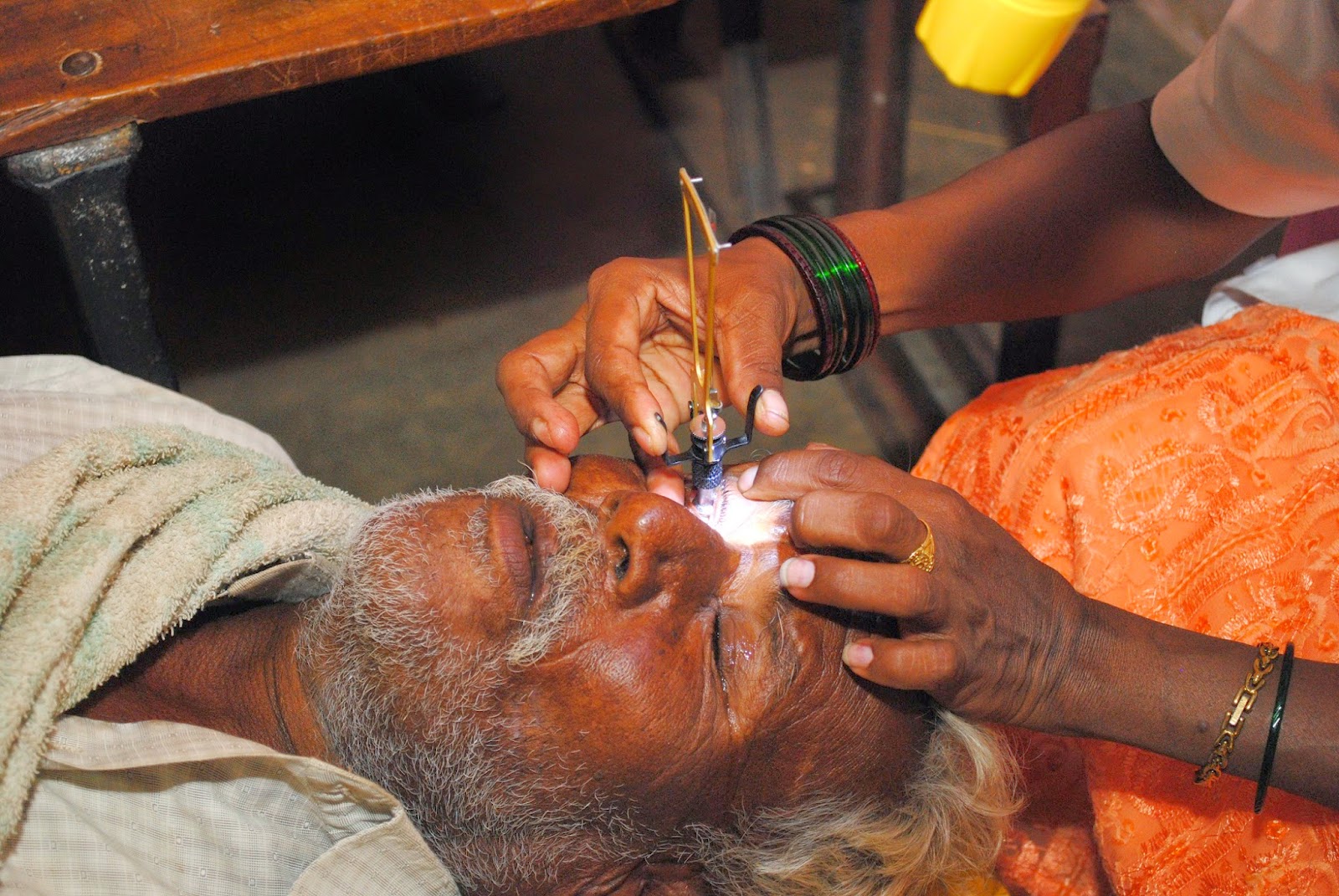
Visual impairment and blindness

Key facts

  • 285 million people are estimated to be visually impaired worldwide: 39 million are blind and 246 have low vision.
  • About 90% of the world's visually impaired live in low-income settings.
  • 82% of people living with blindness are aged 50 and above.
  • Globally, uncorrected refractive errors are the main cause of moderate and severe visual impairment; cataracts remain the leading cause of blindness in middle- and low-income countries.
  • The number of people visually impaired from infectious diseases has reduced in the last 20 years according to global estimates work.
  • 80% of all visual impairment can be prevented or cured. 

Definitions

There are 4 levels of visual function, according to the International Classification of Diseases -10 (Update and Revision 2006):

  1. normal vision
  2. moderate visual impairment
  3. severe visual impairment
  4. blindness.
Moderate visual impairment combined with severe visual impairment are grouped under the term “low vision”: low vision taken together with blindness represents all visual impairment.

The causes of visual impairment
Globally the major causes of visual impairment are:

  • uncorrected refractive errors (myopia, hyperopia or astigmatism) 43 %
  • unoperated cataract, 33%
  • glaucoma, 2%.

Who is at risk?
Approximately 90% of visually impaired people live in developing countries.

People aged 50 and over
About 65 % of all people who are visually impaired are aged 50 and older, while this age group comprises about 20 % of the world's population. With an increasing elderly population in many countries, more people will be at risk of visual impairment due to chronic eye diseases and ageing processes.

Children below age 15
An estimated 19 million children are visually impaired. Of these, 12 million children are visually impaired due to refractive errors, a condition that could be easily diagnosed and corrected. 1.4 million are irreversibly blind for the rest of their lives and need visual rehabilitation interventions for a full psychological and personal development.

In general, These projects reach populations who are underserved or who have limited or no access to eye health care services. The program funds high-quality, sustainable projects that deliver eye care services, develop infrastructure, train personnel and/or provide rehabilitation and education in underserved communities.
You could start Corporate Social Responsibility (CSR) Initiatives for your Company in association with us. Such healthcare projects will make CSR contribution targeted, making them simple to execute as turnkey CSR projects. ‘Promoting healthcare’ is an area identified under schedule VII of the Companies Act 2013 that is eligible to receive CSR funding either directly or through an implementing agency that has a track record.

For CSR partnership,
Write to – support@trinitycarefoundation.org  or
Call Dr. Thomas +91 9880394959 or Mr.Binu +91 9880358888

Trinity Care Foundation executed CSR Projects : http://trinitycarefoundation.org/csrprogrammesindia  & https://www.flickr.com/photos/trinitycarefoundation/albums

Sunday, 24 January 2016

School Dental Program

Trinity Care Foundation calls for Dental interns who are genuinely interested to travel, learn and work in Government Schools in Bangalore,Karnataka.

The internship offers a rare opportunity to work hands-on in schools, learn from pubic health professionals and help those in need of medical attention. The work will focus on issues pertaining to school students and cover dental check-up, dental treatment and oral health education. The internship is for 1 week.


Eligibility

The internship is open to Dentists and Dental students of Indian origin. We welcome those with curiosity to explore and humility to learn.

Location: Bangalore,Karnataka |  Duration: Feb 15- Feb 19, 2016


Type of work

The team will cover a minimum of 5 government schools in outskirt's of Bangalore, and undertake the following activities:

  1. Pre-screening of students for dental caries, oral lesions, facial deformities, etc., 
  2. Facilitating dental intervention for those shortlisted through the pre-screening
  3. Impart awareness on oral health issues, ill effects of tobacco and tooth brushing techniques to students of government schools.
  4. Undertake training for teachers and health workers to carry forward the work.

Orientation for interns : Selected interns for Karnataka will have to attend a day orientation program in Bengaluru Feb 2016.

Last date for application: January 31, 2016

We will organize for the intern’s travel and food during the period of internship.Certificates will be provided to those who have successfully completed the internship.

Those interested, please get in touch with us by writing to us with their resume, Email : trinitycarefoundation@gmail.com |

For more details about our work,Visit -

  1. https://www.flickr.com/photos/trinitycarefoundation/albums 
  2. https://www.facebook.com/trinitycarefoundation 
  3. https://twitter.com/tcfindia  

Saturday, 27 December 2014

Public Health Projects by Trinity Care Foundation

Trinity Care Foundation ( http://trinitycarefoundation.org/ ) is a Public Health Organization based in Bangalore, India that is involved in Holistic Treatment for Children with Facial Deformities, School Health Programs and Outreach Health Programs..   


Focus Projects :-

  1. Outreach Health Programs -  https://www.facebook.com/outreachhealthprograms{ Medical Mission - Bringing health education and Health screening services directly to community members in under-served areas }   
  2. Facial Deformities - https://www.facebook.com/facialdeformities { Transforming Smiles for the Needy ( Children and Young Adults ) with Facial Deformities }. 
  3. School Health Programs https://www.facebook.com/schoolhealthprograms { The school procedures that contribute to the maintenance and improvement of the health of pupils and school personnel including health services healthful living and health education }. 
Trinity Care Foundation is registered as a Public Charitable Trust under the Indian Trusts Act (Reg No. : SHV-4-00745- 2007-2008)  on 27-12-2007.

• Registered Under Section 12A of the Income Tax Act, 1961 dated on 27- 04-2009.
• Registered Under Section 80G of the Income Tax Act,  1961, dated on 20-04-2010.
• Registered under FCRA Act, 2010 - Registration No: 094421576 dated on 09-09-2014.
• Registered with United Nations Office on Drugs and Crime (UNODC).
• Registered with various Govt. Agencies under Government of Karnataka.

Links -  
  1. https://www.facebook.com/trinitycarefoundation 
  2. https://twitter.com/tcfindia 
  3. https://www.flickr.com/photos/trinitycarefoundation/sets/  

Sunday, 16 February 2014

Tricky Teenage Subjects: Effective Adolescent Health Education

Health education is an absolutely vital factor in long-term health, as well as the health of future generations. Educating children about health can be as simple as teaching them about basic hygiene, such as the washing of hands after going to the toilet or how to brush one’s teeth effectively. However, some health education involves more complex subjects, such as drug abuse or HIV; topics which need especial attention when dealing with older children and young adolescents. These health risks are among the biggest threats facing our youth, and school health programmes are one of the most effective ways to positively impact on long-term public health goals, according to the World Health Organisation.


HIV and AIDS

Because of breakthroughs in treatment options, HIV and AIDS are no longer in every headline, unlike only a few short years ago. While this can make it harder to impress upon students how serious the impact of the virus can be, it is nonetheless essential to convey the message effectively. Despite the fact that many associate the virus with intravenous drug use and homosexual intercourse – and while these are risk factors in transmission of HIV – 88.2% of transmission cases in 2011-2012 were via heterosexual intercourse. Nearly 200,00 HIV-related deaths were reported in 2011-2012, and more than 120,000 new cases of infection were recorded. Education about safe sexual practices, the relationship between HIV transmission and drug use, the availability of health services such as HIV testing and free condoms is vital to protect teenagers against this disease.

Drug and Alcohol Abuse

For many teenagers, drug abuse is an easy trap to fall into. Many children grow up seeing various types of substance abuse in their communities, and have not been educated sufficiently about the dangers of drugs, including alcohol and tobacco. The easy availability of cheap “poppers” like aerosol inhalants, and the lax attitude of some retailers towards selling alcohol and tobacco to minors, make the dangers of substance abuse all the more prevalent and damaging. According to the World Health Organisation, alcohol is responsible for approximately 2.5 million deaths every year, which is nearly 4% of deaths worldwide. In India, alcohol-related deaths are on the rise, with 5,478 deaths caused by alcohol in 2012, 21% more than the 4547 cases in 2011. Traffic accidents are a primary cause of alcohol-related deaths, along with liver and brain complications. Toxic or contaminated home-made alcohol is also responsible for deaths from poisoning. Drug abuse is also highly prevalent; according to the World Health Organisation, there are as many as a million known heroin addicts in India, with an estimated further four million who are not registered in treatment programmes. Heroin,cannabis, and Indian-produced pharmaceutical drugs are the most commonly abused drugs. Although teenagers can be inclined to think of experimenting with substances as fun and exciting, it is important to impress upon them not only the dangers of substance abuse, but also to teach them how to recognize the signs of substance abuse in themselves and their peers, and how to seek help.

Sexual Safety


Sexual Safety extends much further than worrying about HIV and AIDS, and includes the risks of other sexually transmitted infections, as well as the risks of teen pregnancy. India, where many girls are married before the age of 19, has a very high rate of teenage pregnancy, which results in a loss of education for women, as well as physical health risks. Adolescent girls under the age of 16 who fall pregnant are four times as likely to die than women in their twenties, while the infant mortality rates of teenage pregnancies are approximately 50% higher than the rates of older women, according to the World Health Organisation. While the cultural aspect of young marriage is not something to be addressed in a health class, the health risks of unintended or young pregnancy are, and educating both young women and men about reproductive health is one of the most effective ways to begin to turn the tide. Additionally, the problem of sexual violence is an important one, and while girls are often taught to try to avoid situations in which they could encounter rape and other forms of sexual violence, it is important to impress upon adolescent boys, too, that these crimes hold severe consequences for them. 


Trinity Care Foundation is a Non Governmental Organization focusing on Craniofacial Surgeries, School Health Programs and Outreach Health Programs in Karnataka, India.

You Would love to Partner or Volunteer with Trinity Care Foundation, Write to us :-


Wednesday, 8 January 2014

Public Health Dentistry

Public Health Dentistry is that part of dentistry providing leadership and expertise in population-based dentistry, oral health surveillance, policy development, community-based disease prevention and health promotion, and the maintenance of the dental safety net.  

Dental public health is the science and the art of preventing oral disease, promoting oral health, and improving the quality of life through the organised efforts of society.


The discipline covers a wide range and includes such topics as:

  1. oral epidemiology,
  2. oral health services research,
  3. preventive dentistry - especially in relation to communities,
  4. oral health education and promotion,
  5. clinical research - with particular emphasis on the care of special groups,
  6. behavioural sciences related to dentistry,
  7. decision theory,
  8. quality of life
  9. risk analysis
  10. ethics and oral health economics
  11. quality assessment
Do connect with us  - https://www.facebook.com/publichealthdentistry and write to us if you love to Volunteer or Intern - support@trinitycarefoundation.org |


Tuesday, 3 December 2013

Health Camp at Maraganakunte Village, Karnataka, India.

On the 23- November -2013,Trinity Care Foundation conducted a Free Health camp in Maraganakunte Village Government High School, Bagepalli Taluk, Chickaballapura District, Karnataka, India for General Public.


Trinity Care Foundation worked in conjunction with Government Health Department officials, Education Department, Gram Panchayath Members and Hindustan Aeronautics Limited { HAL } Officials in order to organize this event. 


Health Workers from villages were directed in advance to escort patients to Health camp. In order to spread awareness about the camp, the foundation organized press releases in local newspapers and also put up advertisement posters in and around the village. 

The Health Specialties are;

1. Pediatrics
2. Cardiology
3. Cancer 
4. Gynecology
5. Diabetology
6. Ophthalmology
7. Diabetology
8. General Medicine  


A team of 18 Doctors, Nurses, Volunteers as well as observers from HAL, Bangalore, set out from Bangalore early in the morning and arrived at Maraganakunte Government School, the site of the camp at around 10:00 am. The Village is 128 Kilometers from Bangalore City towards Devanahalli on Hyderabad Route.


Trinity Care Foundation distributed Free medicines, conducted RBS Test, ECG & ECHO. A referral for Eye care, Cancer, Cardiac and School Health Program system is in Place. 540 Individuals were examined for various Health Issues.

" If you Would love to Partner or Volunteer with Trinity Care Foundation"  Write to us :-


Trinity Care Foundation is a Non Governmental Organization focusing on Craniofacial Surgeries, School Health Programs and Outreach Health Programs in Karnataka, India.

Wednesday, 20 November 2013

Outreach Health Program in Maraganakunte Village

Outreach programs are important tools for bringing health education and screening services directly to community members and serve to contribute to reducing health disparities.They assist communities and hospitals to reach mutually beneficial goals that would otherwise not be achievable for promoting accessible and equitable care.
The incidence of medical conditions and resultant fatalities in India is higher than in the West, primarily due to the non-availability of pervasive affordable quality advanced healthcare solutions for the poorer segments of the society. Well aware of this lacuna, Trinity Care Foundation conducts multiple Community Outreach Programs as its commitment and obligation towards the society. The aim of these programs is to redress the imbalance by providing quality advanced healthcare to the deprived and the underprivileged at their doorsteps. 

Trinity Care Foundation is conducting a Multi-Specialty Health Camp on Saturday, 23-Nov-2013 - https://www.facebook.com/events/1411540895748124/ in backward area of  Bagepalli Taluk , Karnataka, India. 

If you love to provide your valuable services to the society, Connect with us on Facebook - https://www.facebook.com/trinitycarefoundation . | Also write to us - support@trinitycarefoundation.org |


The Health Specialties are;

1. Pediatrics
2. Cardiology
3. Cancer 
4. Gynecology
5. Diabetology
6. Ophthalmology
7. Diabetology
8. General Medicine  

Trinity Care Foundation is a Non Governmental Organization focusing on Craniofacial Surgeries, School Health Programs and Outreach Health Programs in Karnataka, India.

You Would love to Partner or Volunteer with Trinity Care Foundation, Write to us :-