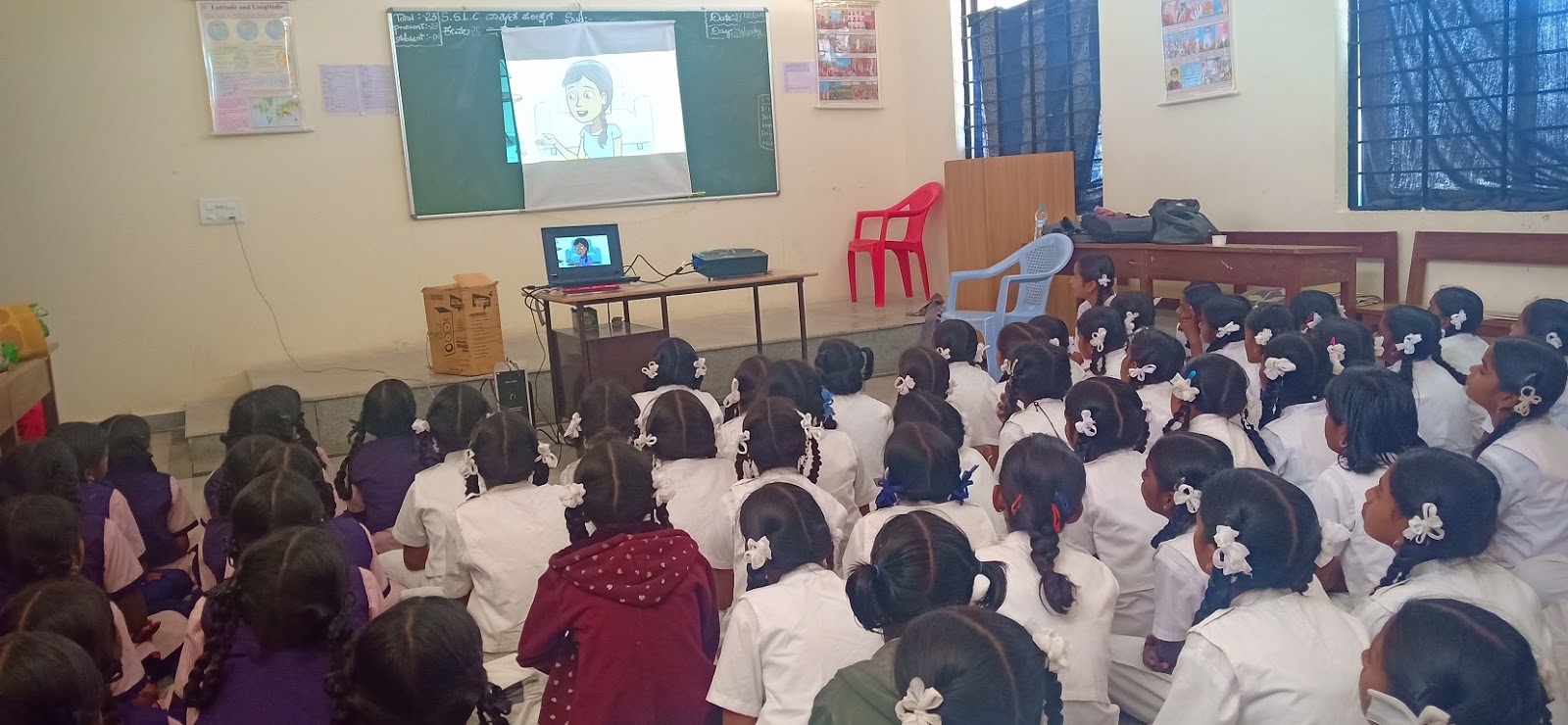
Outreach programs are important tools for bringing health education and screening services directly to community members and serve to contribute to reducing health disparities. |
Write to us - [ support@trinitycarefoundation.org ] for partnering for projects focusing on underserved populations in Karnataka state, India.
Showing posts with label oral public health. Show all posts
Showing posts with label oral public health. Show all posts
Trinity CareFoundation calls for Dentists who are genuinely interested to travel, learn and work in Government Schools in and around Bengaluru, Karnataka, India.
The internship offers a rare opportunity to work hands-on in schools, learn from pubic health professionals and help those in need of medical attention. The work will focus on issues pertaining to school students and cover dental check-up, dental treatment and oral health education. Also Adolescent Girls Health Education is another part of this project.
Trinity Care Foundation is led by a team of Doctors, Dentists and Development sector professionals.
The paid internship is for 7 months. Eligibility The internship is open to Female Dentists of Indian origin. Ability to converse in Kannada is mandatory. Location: In and around Bengaluru city, Karnataka State, India. Duration: 3.September.2019 to 09.March.2020 Here's a video https://youtu.be/K_1hBL-8CLU about public health dentistry initiatives by our team ! Orientation for interns : Selected interns for Karnataka will have to attend a day orientation program in Bengaluru !!! Those interested, please get in touch with us with your resume to our email id: [ support@trinitycarefoundation.org ] We will organize for the intern’s travel and food during the period of internship. Certificates will be provided to those who have successfully completed the internship.
Adolescent Girls Health Education
For more details, Connect with Trinity CareFoundation on Social Media :
Oral health is fundamental to general health and well being. In this document guidelines are given on how to assist school and community leaders to improve health and education of children and young people. The schools can provide a supportive environment for promoting oral health; school policies and education for health are imperative in the attainment of oral health and control of risk behaviours related to diet and nutrition, tobacco use and excessive alcohol consumption.
Oral health enables an individual to speak, eat and socialise without active disease, discomfort or embarrassment. Oral health is fundamental to general health and well being, significantly impacting on quality of life. It can affect general health conditions. Oral health means more than healthy teeth. The health of the gums, oral soft tissues, chewing muscles, the palate, tongue, lips and salivary glands are also significant.
Why is oral health important ?
Poor oral health can have a detrimental effect on children’s performance in school and their success in later life. Children who suffer from poor oral health are 12 times more likely to have more restricted-activity days including missing school than those who do not. More than 50 million hours annually are lost from school due to oral diseases. While tooth decay (dental caries) and gum disease (inflammatory periodontal disease) are among the most prevalent or widespread conditions in human populations, other conditions such as trauma of teeth and jaws, dental erosion, developmental enamel defects and oral cancer are also important. Premature loss of deciduous (milk) teeth may lead to malalignment of the permanent (adult) teeth, impacting on an individual’s appearance. Importantly, tooth loss can affect children’s nutritional intake and, consequently, their growth and development.
There are also important links between oral health and general health. For example, gum disease is associated with general health conditions such as heart disease and diabetes. Similarly, those with complex health problems are sometimes at greater risk of oral diseases that, in turn, further complicate their overall health. Some diseases of the mouth and oral lesions may be the first signs of some life threatening diseases, such as HIV/AIDS.
The school provides an ideal setting for promoting oral health. At the global level, approximately 80% of children attend primary schools and 60% complete at least four years of education, with wide variations between countries and gender. In some countries, more than 50% of children aged 7 to 14 years are out of school and less than 20% complete the first grade due to exploitation of child labour. Nonetheless, schools remain an important setting, offering an efficient and effective way to reach over 1 billion children worldwide and, through them, families and community members.
Schools can provide a supportive environment for promoting oral health.More importantly, schools may be the only place for children, who are at the highest risk of dental disease, to have access to oral health services. This is particularly true in many developing countries, compounded by a lack of dental personnel. With adequate training, school teachers can play an important role in oral health activities.
Trinity Care FoundationOral Health Program supports oral health promotion and dental disease prevention in school-based programs for students in low-income schools from 1st standard through 10 standard [ 6 yrs to 16 yrs].
If you intended to partner or support this public health dentistry initiative in Karnataka state, India, Write ✍️ to [ support@trinitycarefoundation.org ]
Trinity Care Foundation has the Trust registration, PAN, TAN, 12A, 80G, Professional tax and FCRA. It is registered with NITI Ayog, Government of India. It is National Health Mission Partner in Karnataka, India.
Contact Us : email: support@trinitycarefoundation.org tel: Dr. Thomas +91 9880396666 or Mr. Binu +91 9880358888
Health education is an absolutely vital factor in long-term
health, as well as the health of future generations. Educating children about
health can be as simple as teaching them about basic hygiene, such as the
washing of hands after going to the toilet or how to brush one’s teeth
effectively. However, some health education involves more complex subjects,
such as drug abuse or HIV; topics which need especial attention when dealing
with older children and young adolescents. These health risks are among the biggest
threats facing our youth, and school health programmes are one of the most effective ways to positively impact on
long-term public health goals, according to the World Health Organisation.
HIV and AIDS
Because of breakthroughs in treatment options, HIV and AIDS are
no longer in every headline, unlike only a few short years ago. While this can
make it harder to impress upon students how serious the impact of the virus can
be, it is nonetheless essential to convey the message effectively. Despite the
fact that many associate the virus with intravenous drug use and homosexual
intercourse – and while these are risk factors in transmission of HIV – 88.2% of transmission cases in 2011-2012 were
via heterosexual intercourse. Nearly 200,00 HIV-related deaths were
reported in 2011-2012, and more than 120,000 new cases of infection were
recorded. Education about safe sexual practices, the relationship between HIV
transmission and drug use, the availability of health services such as HIV
testing and free condoms is vital to protect teenagers against this disease.
Drug and Alcohol Abuse
For many teenagers, drug abuse is an easy trap to fall into.
Many children grow up seeing various types of substance abuse in their
communities, and have not been educated sufficiently about the dangers of
drugs, including alcohol and tobacco. The easy availability of cheap
“poppers” like aerosol inhalants, and the lax attitude of some
retailers towards selling alcohol and tobacco to minors, make the dangers of
substance abuse all the more prevalent and damaging. According to the World
Health Organisation, alcohol is responsible for approximately 2.5 million deaths every year, which is nearly 4% of
deaths worldwide. In India, alcohol-related deaths are on the rise, with 5,478
deaths caused by alcohol in 2012, 21% more than the 4547 cases in 2011. Traffic
accidents are a primary cause of alcohol-related deaths, along with liver and
brain complications. Toxic or contaminated
home-made alcohol is also responsible for deaths from poisoning. Drug
abuse is also highly prevalent; according to the World Health Organisation,
there are as many as a million known heroin addicts in India, with an estimated
further four million who are not registered in treatment programmes. Heroin,cannabis, and Indian-produced pharmaceutical drugs are
the most commonly abused drugs. Although teenagers can be inclined to
think of experimenting with substances as fun and exciting, it is important to
impress upon them not only the dangers of substance abuse, but also to teach
them how to recognize the signs of substance abuse in themselves and their
peers, and how to seek help.
Sexual Safety
Sexual Safety extends much further than worrying about HIV and
AIDS, and includes the risks of other sexually transmitted infections, as well
as the risks of teen pregnancy. India, where many girls are married before the
age of 19, has a very high rate of teenage pregnancy, which results in a
loss of education for women, as well as physical health risks. Adolescent girls
under the age of 16 who fall pregnant are four times as likely to die than
women in their twenties, while the infant mortality rates of teenage pregnancies
are approximately 50% higher than the rates of older women, according to
the World Health Organisation. While the cultural
aspect of young marriage is not something to be addressed in a health class,
the health risks of unintended or young pregnancy are, and educating both young
women and men about reproductive health is one of the most effective ways to
begin to turn the tide. Additionally, the problem of sexual violence is an
important one, and while girls are often taught to try to avoid situations in
which they could encounter rape and other forms of sexual violence, it is
important to impress upon adolescent boys, too, that these crimes hold severe
consequences for them.
Trinity Care Foundation is a Non Governmental Organization focusing on Craniofacial Surgeries, School Health Programsand Outreach Health Programs in Karnataka, India.
You Would love to Partner or Volunteer with Trinity Care Foundation, Write to us :-
What makes oral health a high priority in public health is its universal nature. “It’s a neglected epidemic,” says Dr. Myron Allukian Jr., DDS, MPH. Almost everyone has had at least one oral disease, such as dental caries, periodontal disease, malocclusion, infections or cancer at some time during his or her life.
Public health dentists practice at the local, state and federal levels as well as in academic environments. The Four major areas of oral public health are ; Health Policy and administration; research; oral health promotion and disease prevention; and delivery systems. Policy work includes such dissimilar concerns as developing dental programs for low-income communities and making recommendations for the state dental practice act.
Dr. Allukian’s days are busy and demanding — and, he admits, “sometimes overwhelming.” But what he loves about his work “is that it’s extremely exciting and challenging. And the opportunity to make a difference in the lives of people is personally enriching.”
The Focus of Dental Public Health is on good Oral Health, Disease Prevention and other concerns specific to Children, Youth and Seniors. Most Programs are focusing on Kids and Seniors.
For Children and Youth: School, College, Orphanages and Specialized Population: Dental Screening, Education and Treatments and referral to Specialized Dental Centers.
For Adults: Dental Screening, Education and Treatments and referral to Specialized Dental Centers.
For Seniors living in nursing homes, retirement homes and living centers: Screening for potential dental problems.
Awareness workshops on the importance of good oral health and disease prevention specific to seniors.
Professional cleaning and identification of dentures for seniors in the mobile dental clinic.
Demonstrations on brushing techniques for residents and/or their caregivers.
4. For Teachers and Parents: Health Education Program for Teachers is a must since children are with them most of the time, Parents can be also trained to reinforce the message at home. Health Education during Parents Teacher’s Association Meet is a wonderful Concept that could be implemented.
Trinity Care Foundation is a NGO with main focus on enhancing the public health programs effectiveness and strengthening the community health programs by reaching out to the socially and economically underprivileged sections of the society both in rural and urban India. We require your Support to implement these Community Health Programs in Government Schools in Ramanagara, Kolar and Bangalore Rural Districts. Kindly Contact us.. Email: support@trinitycarefoundation.org .
Programs for Specialized Populations:
This Program was for Oral Health Education and Screening for Women Self Help Groups( 18 members) in Halsuru Village, Kanakapura Taluk, Ramanagara District, Karnataka, India. There was health education focusing on Oral Hygiene, Children’s Teeth, Tobacco,Myths of Dentistry and General Health and followed by discussion, Oral Health Check-up and Treatment. Women are the Light for their Families mostly in Rural Areas. They have more commitment towards their family and near and dear ones.
This Program was conducted in an Orphanage in Bangalore for Children living with HIV. The Program focused on Check-up, Health Education and Treatment. Treatments like scaling and restoration was done at the Orphanage on the Mobile Dental Unit and those requiring specialized treatment were referred to M.R.Ambedkar Dental College and Hospital, Bangalore, India.
Trinity Care Foundation is a Non Governmental Organization focusing on Craniofacial Surgeries, School Health and Outreach Health Programs in Karnataka, India.
Oral Health Promotion for Women in Rural Karnataka, India through Women Self Help Groups.
Problem: What problem is this project trying to address?
Health Disparity is universal phenomenon and true for oral health also. The oral health disparity exists in terms of rich and poor, rural and urban and between men and women. Main reason being lack of awareness, inequitable distribution of service providers, who, cost of care, unavailability of services and no budgetary allocation or oral health policy at national or regional level in India . This situation makes the oral health services unaffordable and way beyond the reach of our rural population. Thus, primary prevention of oro-dental problems through education, and making available of services and empowering women population to afford these services is the need of the hour and it is high time to activate such strategic programmes for this population.
Solution: What is the proposed solution?
Increasing the knowledge : to create awareness among the rural population the women self help group will be given health education every Friday in a month , as a routine programme for one year which will cover 57 SHGs and a population of 1425 in around Halasuru. To improve the access to services: The women attending this education programme will get the free screening and the treatment at RHTC a satellite center from M.R.Ambedkar Dental College in Halasuru village, Kanakapura taluk, Ramnagara District. Monitor the Cost: For the sustainability of this programme with the help of funding from the Asoka a micro insurance plan will be provided for these women who can avail the treatment in the centers free of cost.
Trinity Care Foundation is a Non-Profit Organization, has the Trust registration, PAN, TAN, 12A, 80G, Professional tax and FCRA. It is registered with NITI Aayog, Government of India. It is National Health Mission Partner in Karnataka, India.
Connect with us to implement community health initiatives in Karnataka state, India : www.trinitycarefoundation.com/ | Contact Us : | tel: +91 988039 6666 | +91 988035 8888 |
Trinity Care Foundation requires your Support to Implement these Community Health Programs in Government Schools in Ramanagara, Kolar and Bangalore Rural Districts. Kindly Contact us..
Dental Public Health is the science and art of preventing and controlling dental diseases and promoting dental health through organized community efforts.
Dental Public Health specialists must have broad knowledge and skills in public health administration, research methodology, the prevention and control of oral diseases, and the delivery and financing of oral health care.
Trinity Care Foundationrequires your Support to implement these Community Health Programs in Government Schools in Ramanagara, Kolar and Bangalore Rural Districts. Kindly Contact us..
Dental sealants are thin plastic coatings that are applied to the grooves on the chewing surfaces of the back teeth to protect them from tooth decay. Most tooth decay in children and teens occurs on these surfaces. Sealants protect the chewing surfaces from tooth decay by keeping germs and food particles out of these grooves.
Which teeth are suitable for sealants?
Permanent molars are the most likely to benefit from sealants. The first molars usually come into the mouth when a child is about 6 years old. Second molars appear at about age 12. It is best if the sealant is applied soon after the teeth have erupted, before they have a chance to decay.
How are sealants applied?
Applying sealants does not require drilling or removing tooth structure. The process is short and easy. After the tooth is cleaned, a special gel is placed on the chewing surface for a few seconds. The tooth is then washed off and dried. Then, the sealant is painted on the tooth. The dentist or dental hygienist also may shine a light on the tooth to help harden the sealant. It takes about a minute for the sealant to form a protective shield.
Are sealants visible?
Sealants can only be seen up close. Sealants can be clear, white, or slightly tinted, and usually are not seen when a child talks or smiles.
Will sealants make teeth feel different?
As with anything new that is placed in the mouth, a child may feel the sealant with the tongue. Sealants, however, are very thin and only fill the pits and grooves of molar teeth.
How long will sealants last?
A sealant can last for as long as 5 to 10 years. Sealants should be checked at your regular dental appointment and can be reapplied if they are no longer in place.
Will sealants replace fluoride for cavity protection?
No. Fluorides, such as those used in toothpaste, mouth rinse, and community water supplies also help to prevent decay, but in a different way. Sealants keep germs and food particles out of the grooves by covering them with a safe plastic coating. Sealants and fluorides work together to prevent tooth decay.
How do sealants fit into a preventive dentistry program?
Sealants are one part of a child's total preventive dental care. A complete preventive dental program also includes fluoride, twice-daily brushing , wise food choices, and regular dental care.
Why is sealing a tooth better than waiting for decay and filling the cavity?
Decay damages teeth permanently. Sealants protect them. Sealants can save time, money, and the discomfort sometimes associated with dental fillings. Fillings are not permanent. Each time a tooth is filled, more drilling is done and the tooth becomes a little weaker.
The sole purpose of the educational, prevention and curative oral health activities under the School Oral Health Program is to nullify the incidence of hard and soft tissue diseases and bring out a new caries free generation. The protocols for the School Oral Health Program are:
Trinity Care Foundation requires your Support to implement these Community Health Programs in Government Schools in Ramanagara, Kolar and Bangalore Rural Districts in Karnataka, India. Kindly Contact us..
Kindly implement School Oral Health Programs.. Click on the link: Trinity Care Foundation for Information..
Public Health Dentistry, dental specialty concerned primarily with prevention of dental decay and of periodontal disease (disease of the tissues surrounding the teeth).
Public health dentistry is practiced generally through governmentally sponsored programs, which are for the most part directed toward public-school children in the belief that their education in oral hygiene is the best way to reach the general public. The pattern for such programs in the past was a dentist’s annual visit to a school to lecture and to demonstrate proper tooth-brushing techniques.
Trinity Care Foundation requires your Supportto implement these Community Health Programs in Government Schools in Ramanagara, Kolar and Bangalore Rural Districts. Kindly Contact us..
Public Health Dentistry is a non-clinical speciality of Dentistry and is involved in the assessment of dental health needs and improving the dental health of populations rather than individuals.