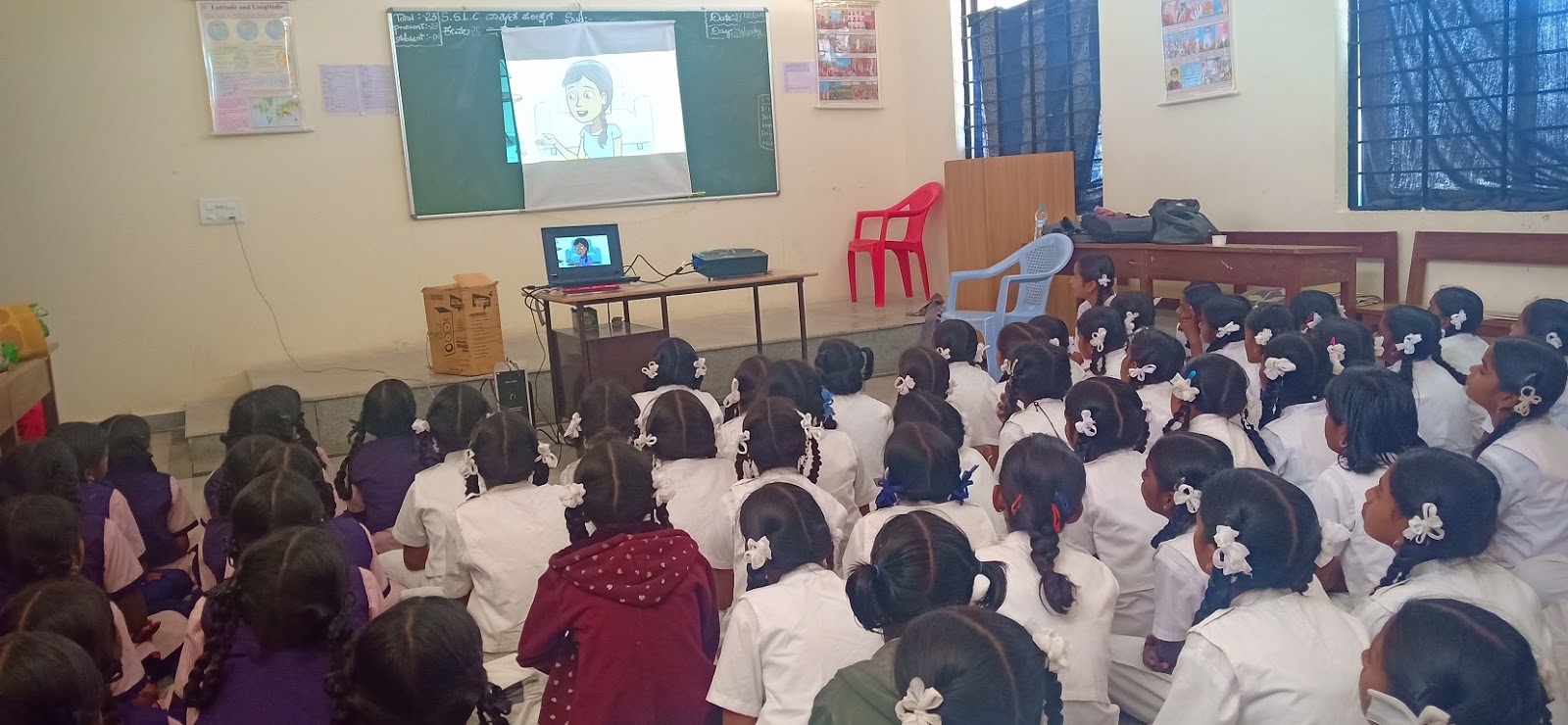
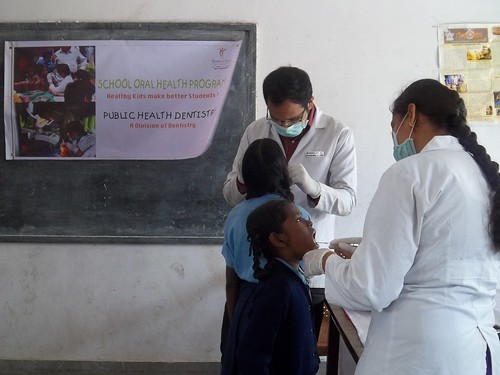
Outreach programs are important tools for bringing health education and screening services directly to community members and serve to contribute to reducing health disparities. |
Write to us - [ support@trinitycarefoundation.org ] for partnering for projects focusing on underserved populations in Karnataka state, India.
Showing posts with label public health dentistry. Show all posts
Showing posts with label public health dentistry. Show all posts
Trinity CareFoundation calls for Dentists who are genuinely interested to travel, learn and work in Government Schools in and around Bengaluru, Karnataka, India.
The internship offers a rare opportunity to work hands-on in schools, learn from pubic health professionals and help those in need of medical attention. The work will focus on issues pertaining to school students and cover dental check-up, dental treatment and oral health education. Also Adolescent Girls Health Education is another part of this project.
Trinity Care Foundation is led by a team of Doctors, Dentists and Development sector professionals.
The paid internship is for 7 months. Eligibility The internship is open to Female Dentists of Indian origin. Ability to converse in Kannada is mandatory. Location: In and around Bengaluru city, Karnataka State, India. Duration: 3.September.2019 to 09.March.2020 Here's a video https://youtu.be/K_1hBL-8CLU about public health dentistry initiatives by our team ! Orientation for interns : Selected interns for Karnataka will have to attend a day orientation program in Bengaluru !!! Those interested, please get in touch with us with your resume to our email id: [ support@trinitycarefoundation.org ] We will organize for the intern’s travel and food during the period of internship. Certificates will be provided to those who have successfully completed the internship.
Adolescent Girls Health Education
For more details, Connect with Trinity CareFoundation on Social Media :
Oral health is fundamental to general health and well being. In this document guidelines are given on how to assist school and community leaders to improve health and education of children and young people. The schools can provide a supportive environment for promoting oral health; school policies and education for health are imperative in the attainment of oral health and control of risk behaviours related to diet and nutrition, tobacco use and excessive alcohol consumption.
Oral health enables an individual to speak, eat and socialise without active disease, discomfort or embarrassment. Oral health is fundamental to general health and well being, significantly impacting on quality of life. It can affect general health conditions. Oral health means more than healthy teeth. The health of the gums, oral soft tissues, chewing muscles, the palate, tongue, lips and salivary glands are also significant.
Why is oral health important ?
Poor oral health can have a detrimental effect on children’s performance in school and their success in later life. Children who suffer from poor oral health are 12 times more likely to have more restricted-activity days including missing school than those who do not. More than 50 million hours annually are lost from school due to oral diseases. While tooth decay (dental caries) and gum disease (inflammatory periodontal disease) are among the most prevalent or widespread conditions in human populations, other conditions such as trauma of teeth and jaws, dental erosion, developmental enamel defects and oral cancer are also important. Premature loss of deciduous (milk) teeth may lead to malalignment of the permanent (adult) teeth, impacting on an individual’s appearance. Importantly, tooth loss can affect children’s nutritional intake and, consequently, their growth and development.
There are also important links between oral health and general health. For example, gum disease is associated with general health conditions such as heart disease and diabetes. Similarly, those with complex health problems are sometimes at greater risk of oral diseases that, in turn, further complicate their overall health. Some diseases of the mouth and oral lesions may be the first signs of some life threatening diseases, such as HIV/AIDS.
The school provides an ideal setting for promoting oral health. At the global level, approximately 80% of children attend primary schools and 60% complete at least four years of education, with wide variations between countries and gender. In some countries, more than 50% of children aged 7 to 14 years are out of school and less than 20% complete the first grade due to exploitation of child labour. Nonetheless, schools remain an important setting, offering an efficient and effective way to reach over 1 billion children worldwide and, through them, families and community members.
Schools can provide a supportive environment for promoting oral health.More importantly, schools may be the only place for children, who are at the highest risk of dental disease, to have access to oral health services. This is particularly true in many developing countries, compounded by a lack of dental personnel. With adequate training, school teachers can play an important role in oral health activities.
Trinity Care FoundationOral Health Program supports oral health promotion and dental disease prevention in school-based programs for students in low-income schools from 1st standard through 10 standard [ 6 yrs to 16 yrs].
If you intended to partner or support this public health dentistry initiative in Karnataka state, India, Write ✍️ to [ support@trinitycarefoundation.org ]
Trinity Care Foundation has the Trust registration, PAN, TAN, 12A, 80G, Professional tax and FCRA. It is registered with NITI Ayog, Government of India. It is National Health Mission Partner in Karnataka, India.
Contact Us : email: support@trinitycarefoundation.org tel: Dr. Thomas +91 9880396666 or Mr. Binu +91 9880358888
Poor oral health and untreated infections can have a significant impact on school aged children.
Children have trouble eating and sleeping, and can experience speech impairments, trouble focusing and low self esteem.
Dental disease can greatly reduce a child’s capacity to succeed in the educational environment.
Children are often unable to verbalize their dental pain.
Teachers may notice a child who is having difficulty attending to tasks or who is demonstrating the effects of pain (anxiety, fatigue, irritability, depression and withdrawal from normal activities).
School nurses report a range of oral health problems such as dental caries, gingival disease, malocclusion (poor bite), loose teeth and oral trauma.
Children who are missing teeth have to limit their food choices because of chewing problems, which may result in nutritionally inadequate diets.
Inadequate nutrition during childhood can have a detrimental effect on children’s cognitive development and productivity in adulthood.
The Trinity Care FoundationOral Health Program supports oral health promotion and dental disease prevention in school-based programs for students in low-income schools from 1st standard through 10 standard [ 6 yrs to 16 yrs].
The Trinity Care Foundation Oral Health Programs currently funds 59 schools throughout Bangalore Urban District, Karnataka state, India with small grants to promote oral health education, dental check-ups, treatments, oral health kits and provide a referral service to higher centers.
Some schools also receive additional grant money to provide dental sealants !
If you intended to partner or support this public health dentistry initiative in Karnataka state, India, To Connect with us, ✍️ to [ support@trinitycarefoundation.org ] ✍️
Trinity Care Foundation is a Public Health Organization, has the Trust registration, PAN, TAN, 12A, 80G, Professional tax and FCRA. It is registered with NITI Ayog, Government of India. It is National Health Mission Partner in Karnataka state, India.
Contact Us : email: support@trinitycarefoundation.org tel: Dr. Thomas +91 9880396666 or Mr. Binu +91 9880358888
Meet us : #328, Akash Deep, 2nd Floor, Indiranagar 1st Stage,
CMH Road,Bangalore 560 038, Karnataka, India. Direction – Map : https://goo.gl/maps/dF2rtWmazKk
Oral diseases affect 3.9 billion people worldwide, with untreated tooth decay (dental caries) impacting almost half of the world’s population (44%), making it the most prevalent NCD.
Globally, between 60–90% of schoolchildren and nearly 100% adults have tooth decay, often leading to pain and discomfort.
Severe periodontal (gum) disease, which may result in tooth loss, is found in 15–20% of middle-aged (35–44 years) adults.
Severe periodontitis and untreated tooth decay in the primary teeth (milk teeth or baby teeth) are among the top 10 most prevalent of all conditions. Combined, these conditions affect 20% of the global population
Globally, about 30% of people aged 65–74 years have no natural teeth, a burden expected to increase in the light of ageing populations
Oral disease is associated with significant pain and anxiety, as well as disfigurement, acute and chronic infections, eating and sleep disruption, and can result in an impaired quality of life. In developing countries, this is exacerbated due to the lack of pain control and treatment not being readily available
Oral conditions are the fourth most expensive to treat. In the United States alone, US$110 billion are spent yearly on oral healthcare. In the European Union, annual spending on oral healthcare was estimated at €79 billion in the years 2008-2012, which is more than the money invested in the care of cancer or respiratory diseases
Oral health is essential to maintaining general health and well-being
About Trinity Care Foundation;
Trinity Care Foundation is a charitable Trust with track record of 9+ years in priority areas of health. Registered with the Income Tax Department, Government of India under Section 12A and 80G of the Income Tax Act, 1961. Registered with the Ministry of Home Affairs, Government of India under Section 11 (1) of the Foreign Contributions (Regulation) Act (FCRA), 2010. It is also registered with the National Health Mission and NITI Aayog [ The National Institution for Transforming India, is the premier policy 'Think Tank' of the Government of India.]
Trinity Care Foundation calls for interns who are genuinely interested to travel, learn and work in Government Schools in Bangalore,Karnataka.
The internship offers a rare opportunity to work hands-on in schools, learn from pubic health professionals and help those in need of medical attention. The work will focus on issues pertaining to school students and cover dental check-up, dental treatment and oral health education. The internship is for 1 month.
Eligibility
The internship is open to Dentists and Dental students of Indian origin. Ability to converse in the local language is a must. Above all, we welcome those with curiosity to explore and humility to learn. Location: In and around Bangalore city, Karnataka State, India. Period : 24.August.2016 to 30.October.2016
Type of work
The team will cover Government schools in and around Bangalore, and undertake the following activities:
Pre-screening of students for dental caries, oral lesions, facial deformities, etc.,
Facilitating dental intervention for those shortlisted through the pre-screening
Impart awareness on oral health issues, ill effects of tobacco and tooth brushing techniques to students of government schools.
Undertake training for teachers and health workers to carry forward the work.
Orientation for interns : Selected interns for Karnataka will have to attend a day orientation program in Bengaluru on 12.August.2016.
Last date for application: Bangalore, Karnataka : 5.August.2016 Those interested, please get in touch with us by writing to us with their resume to our, Email id: [ trinitycarefoundation@gmail.com ]
We will organize for the intern’s travel and food during the period of internship.Certificates will be provided to those who have successfully completed the internship.
For more details, Connect with us on Social Media :
WHO's Global School Health Initiative, launched in 1995, seeks to mobilize and strengthen health promotion and education activities at local, national, regional and global levels. The initiative is designed to improve the health of children, school personnel, families and other members of the community through schools. The Health Promoting School can be characterized as a school constantly strengthening its capacity as a healthy setting for living, learning and working. The WHO Global School Health Initiative consists of four broad strategies:
Building capacity to advocate for improved school health programmes.
Creating networks and alliances for the development of Health Promoting Schools.
Strengthening national capacity.
Research to improve school health programmes.
To help individuals and groups advocate the development of Health Promoting Schools, WHO has produced an "Information Series on School Health". Guidelines are given on how to assist school and community leaders to improve the health and education of young people, and individual documents in the Series encourage schools to address one or more important health issues.
The WHO Oral Health Programme has prepared an oral health technical document to strengthen the implementation of an oral health component of the Health Promoting Schools programme. Strong arguments for oral health promotion through schools are for example:
Pupils and students can be accessed during their formative years, from childhood to adolescence. These are important stages in people's lives when lifelong oral health related behaviour as well as beliefs and attitudes are being developed.
The schools can provide a supportive environment for promoting oral health. Access to safe water, for example, may allow for general and oral hygiene programmes. Also, a safe physical environment in schools can help reduce the risk of accidents and concomitant dental trauma.
The burden of oral disease in children is significant. Most established oral diseases are irreversible, will last for a lifetime and have impact on quality of life and general health.
School policies, the physical environment and education for health are essential for attainment of oral health and control of risk behaviours, such as intake of sugary foods and drinks, tobacco use and alcohol consumption.
Schools can provide a platform for provision of oral health care, i.e. preventive and curative services.
Through an extensive Health Promoting Schools network, WHO works at global and regional levels with Education International, UNAIDS and UNESCO to enable teachers' representative organizations throughout the world to use their capacities and experiences to improve health through schools. The WHO Oral Health Programme links up to those networks in addition to school oral health networks established across countries and regions.
Training-of-trainers programmes for schoolteachers are conducted to increase national capacities in relation to the integration of oral health promotion in schools. As part of the development of WHO's Mega-Countries Health Promotion network, the WHO Oral Health Programme encourages exchange of good practice among persons responsible for school health and health promotion in countries with the world's largest populations.
Oral health of youth
WHO compiles and consolidates research on interventions that can improve health through schools in order to build capacity at national level and to monitor the health status of children and teachers. The WHO Oral Health Programme has developed methodologies for process and outcome evaluation of school oral health programmes in order to strengthen the implementation of such programmes, and the WHO Collaborating Centres on Oral Health.
One fifth of the world’s population is adolescent, defined by WHO as a person between 10 and 19 years of age. A young person with high self-esteem and good social skills who is clear about her/his values and has access to relevant information is likely to make positive decisions about health. External factors have a tremendous impact on how adolescents think and behave; the values and behaviours of their peers are increasingly important while parents and other family members continue to be influential. Factors within the wider environment are also significant (e.g. mass media, industries, community institutions). Programmes aimed at improving the oral health of youth need to take these factors into account, for example, in relation to consumption of sweets, sugary beverages, tobacco and alcohol. Effective alliances of the home, schools, oral health professionals and community organizations are needed in order to control risks to oral health in young people.
Trinity Care Foundation is a Non Governmental Organization focusing on Craniofacial Surgeries, School Health Programsand Outreach Health Programs in Karnataka, India.
You Would love to Partner or Volunteer with Trinity Care Foundation, Write to us :-
Public Health Dentistry is that part of dentistry providing leadership and expertise in population-based dentistry, oral health surveillance, policy development, community-based disease prevention and health promotion, and the maintenance of the dental safety net. Dental public health is the science and the art of preventing oral disease, promoting oral health, and improving the quality of life through the organised efforts of society.
The discipline covers a wide range and includes such topics as:
oral epidemiology,
oral health services research,
preventive dentistry - especially in relation to communities,
oral health education and promotion,
clinical research - with particular emphasis on the care of special groups,
Outreach programs are important tools for bringing health education and screening services directly to community members and serve to contribute to reducing health disparities.They assist communities and hospitals to reach mutually beneficial goals that would otherwise not be achievable for promoting accessible and equitable care.
The incidence of medical conditions and resultant fatalities in India is higher than in the West, primarily due to the non-availability of pervasive affordable quality advanced healthcare solutions for the poorer segments of the society. Well aware of this lacuna, Trinity Care Foundation conducts multiple Community Outreach Programs as its commitment and obligation towards the society. The aim of these programs is to redress the imbalance by providing quality advanced healthcare to the deprived and the underprivileged at their doorsteps.
Trinity Care Foundation is a Non Governmental Organization focusing on Craniofacial Surgeries, School Health Programsand Outreach Health Programs in Karnataka, India.
You Would love to Partner or Volunteer with Trinity Care Foundation, Write to us :-
What makes oral health a high priority in public health is its universal nature. “It’s a neglected epidemic,” says Dr. Myron Allukian Jr., DDS, MPH. Almost everyone has had at least one oral disease, such as dental caries, periodontal disease, malocclusion, infections or cancer at some time during his or her life.
Public health dentists practice at the local, state and federal levels as well as in academic environments. The Four major areas of oral public health are ; Health Policy and administration; research; oral health promotion and disease prevention; and delivery systems. Policy work includes such dissimilar concerns as developing dental programs for low-income communities and making recommendations for the state dental practice act.
Dr. Allukian’s days are busy and demanding — and, he admits, “sometimes overwhelming.” But what he loves about his work “is that it’s extremely exciting and challenging. And the opportunity to make a difference in the lives of people is personally enriching.”
Every year, on 31 May, WHO and partners everywhere mark World No Tobacco Day, highlighting the health risks associated with tobacco use and advocating for effective policies to reduce tobacco consumption. Tobacco use is the single most preventable cause of death globally and is currently responsible for killing one in 10 adults worldwide.
The theme for World No Tobacco Day 2013 is: ban tobacco advertising, promotion and sponsorship.
A comprehensive ban of all tobacco advertising, promotion and sponsorship is required under the WHO Framework Convention for Tobacco Control (WHO FCTC) for all Parties to this treaty within five years of the entry into force of the Convention for that Party. Evidence shows that comprehensive advertising bans lead to reductions in the numbers of people starting and continuing smoking. Statistics show that banning tobacco advertising and sponsorship is one of the most cost-effective ways to reduce tobacco demand and thus a tobacco control “best buy”.
Goals
The global tobacco epidemic kills nearly six million people each year, of which more than 600 000 are non-smokers dying from breathing second-hand smoke. Unless we act, the epidemic will kill more than eight million people every year by 2030. More than 80% of these preventable deaths will be among people living in low- and middle-income countries.
The ultimate goal of World No Tobacco Day is to contribute to protect present and future generations not only from these devastating health consequences, but also against the social, environmental and economic scourges of tobacco use and exposure to tobacco smoke.
spur countries to implement WHO FCTC Article 13 and its Guidelines to comprehensively ban tobacco advertising, promotion and sponsorship such that fewer people start and continue to use tobacco; and
drive local, national and international efforts to counteract tobacco industry efforts to undermine tobacco control, specifically industry efforts to stall or stop comprehensive bans on tobacco advertising, promotion and sponsorship.
The Focus of Dental Public Health is on good Oral Health, Disease Prevention and other concerns specific to Children, Youth and Seniors. Most Programs are focusing on Kids and Seniors.
For Children and Youth: School, College, Orphanages and Specialized Population: Dental Screening, Education and Treatments and referral to Specialized Dental Centers.
For Adults: Dental Screening, Education and Treatments and referral to Specialized Dental Centers.
For Seniors living in nursing homes, retirement homes and living centers: Screening for potential dental problems.
Awareness workshops on the importance of good oral health and disease prevention specific to seniors.
Professional cleaning and identification of dentures for seniors in the mobile dental clinic.
Demonstrations on brushing techniques for residents and/or their caregivers.
4. For Teachers and Parents: Health Education Program for Teachers is a must since children are with them most of the time, Parents can be also trained to reinforce the message at home. Health Education during Parents Teacher’s Association Meet is a wonderful Concept that could be implemented.
Trinity Care Foundation is a NGO with main focus on enhancing the public health programs effectiveness and strengthening the community health programs by reaching out to the socially and economically underprivileged sections of the society both in rural and urban India. We require your Support to implement these Community Health Programs in Government Schools in Ramanagara, Kolar and Bangalore Rural Districts. Kindly Contact us.. Email: support@trinitycarefoundation.org .
Programs for Specialized Populations:
This Program was for Oral Health Education and Screening for Women Self Help Groups( 18 members) in Halsuru Village, Kanakapura Taluk, Ramanagara District, Karnataka, India. There was health education focusing on Oral Hygiene, Children’s Teeth, Tobacco,Myths of Dentistry and General Health and followed by discussion, Oral Health Check-up and Treatment. Women are the Light for their Families mostly in Rural Areas. They have more commitment towards their family and near and dear ones.
This Program was conducted in an Orphanage in Bangalore for Children living with HIV. The Program focused on Check-up, Health Education and Treatment. Treatments like scaling and restoration was done at the Orphanage on the Mobile Dental Unit and those requiring specialized treatment were referred to M.R.Ambedkar Dental College and Hospital, Bangalore, India.
Trinity Care Foundation is a Non Governmental Organization focusing on Craniofacial Surgeries, School Health and Outreach Health Programs in Karnataka, India.
Public Health Dentistry
is the branch of Dentistry , which focuses on preventing and
controlling dental diseases and promoting dental health through
organized community efforts.
Public Health Dentistry is that form of Dental practice that serves
the community as a patient rather than the Individual. Public Health
Dentists must have broad knowledge and skills in public health
administration, research methodology, the prevention and control of oral
diseases and the delivery and financing of oral health care. Public Health Dentists promote oral health by:
providing programs and services that address oral health issues.
Dental Public Health
The
Focus of Dental Public Health is on good Oral Health, Disease
Prevention and other concerns specific to Children, Youth and Seniors..
Most Programs are focusing on Kids and Seniors.
For children and youth:
School, College, Orphanages and Specialized Population: Dental Screening, Education and Treatments and referral to Specialized Dental Centers.
For Adults:
Dental Screening, Education and Treatments and referral to Specialized Dental Centers.
For seniors living in nursing homes, retirement homes and living centers :
Screening for potential dental problems.
Awareness workshops on the importance of good oral health and disease prevention specific to seniors.
Professional cleaning and identification of dentures for seniors in the mobile dental clinic.
Demonstrations on brushing techniques for residents and/or their caregivers.
For teachers and parents:
Health Education Program for Teachers is a must since children
are with them most of the time, Parents can be also trained to reinforce
the message at home. Health Education during Parents Teacher's Association Meet is a wonderfull Concept that could be implemented..
"Trinity Care Foundation requires your Support to implement these Community Health Programs in Government Schools in Ramanagara, Kolar and Bangalore Rural Districts. Kindly Contact us.. "
Dental Screening for SHG's ( Self Help Groups) in Karnataka, India..
This Program was for Oral Health Education and Screening for
Women Self Help Groups( 18 members) in Halsuru Village, Kanakapura
Taluk, Ramanagara District, Karnataka, India. There was health education
focusing on Oral Hygiene, Children's Teeth, Tobacco, Myths of Dentistry
and General Health and followed by discussion, Oral Health Check-up and
Treatment.
Women are the Light for their Families mostly in Rural Areas. They
have more commitment towards their family and near and dear ones.
Dental Screening for Children Living with AIDS in Bangalore, India..
This Program was conducted in an Orphanage in Bangalore for
Children living with HIV. The Program focused on Check-up, Health
Education and Treatment. Treatments like scaling and restoration was done at the Orphanage on
the Mobile Dental Unit and those requiring specialized treatment were
referred to M.R.Ambedkar Dental College and Hospital, Bangalore, India.
Trinity Care Foundation is a Non Governmental Organization focusing on Craniofacial Surgeries, School Health and Outreach Health Programs in Karnataka, India.